TEKNOFEST S.A.K.A
Back to shelfPerception, mapping and a Unity test bench for a drone that finds a safe route for a ground vehicle in a disaster area.
Result: In simulation, 27 of 27 seeded test fields got a safe route, with no wrong routes; route ends were a median 0.38 m from the target.
Private repository
Ask for a code sample- Role
- Computer vision and autonomy developer
- Year
- 2026
- Stack
- Python, PyTorch, SegFormer-B0, YOLOv8n, OpenCV
- Also used
- Unity (C#), ONNX / Unity Inference, ArduPilot SITL, MAVLink, Jetson Orin Nano
How the drone finds a route for the ground vehicle
The ground vehicle follows the route and stops beside the H.
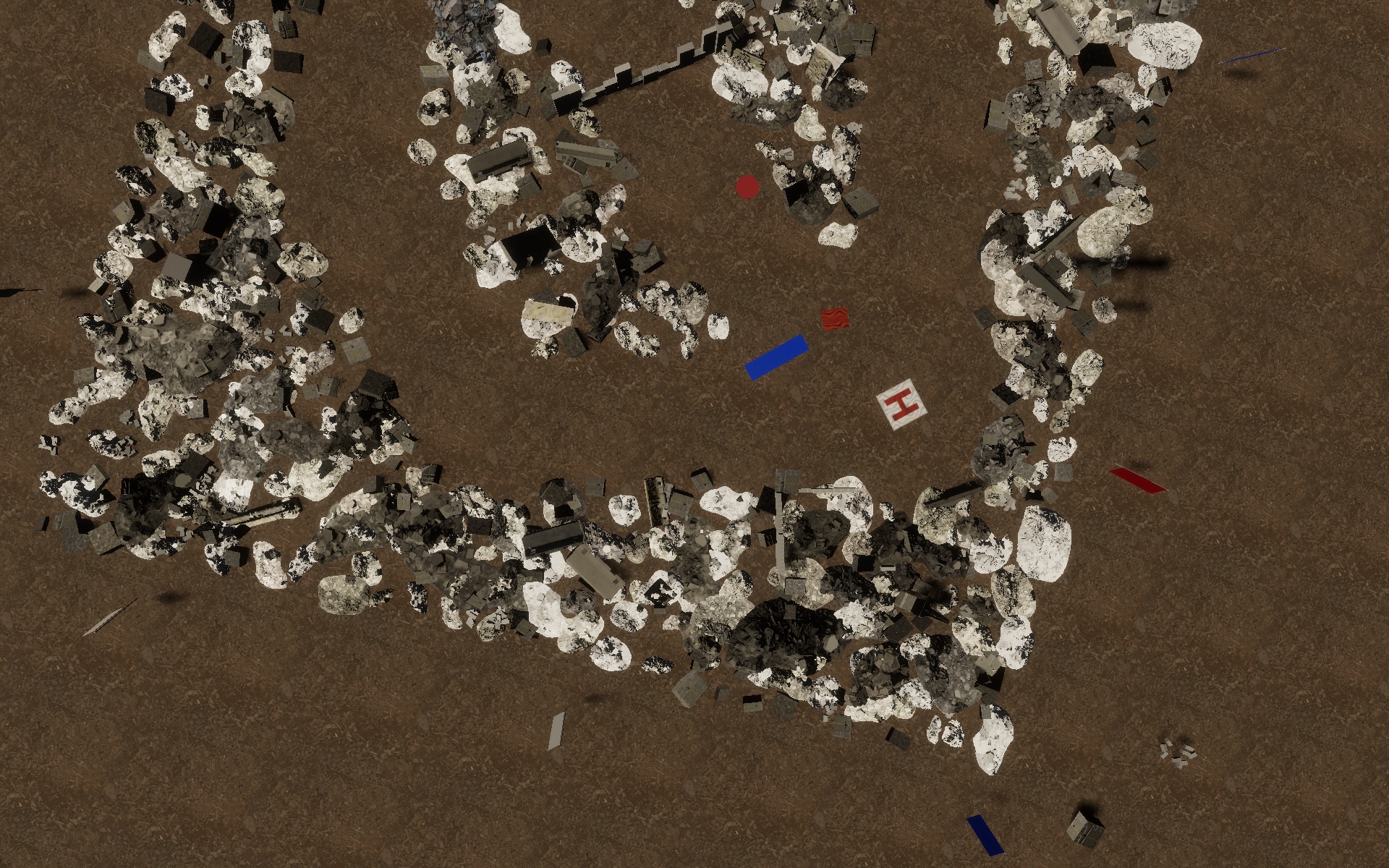
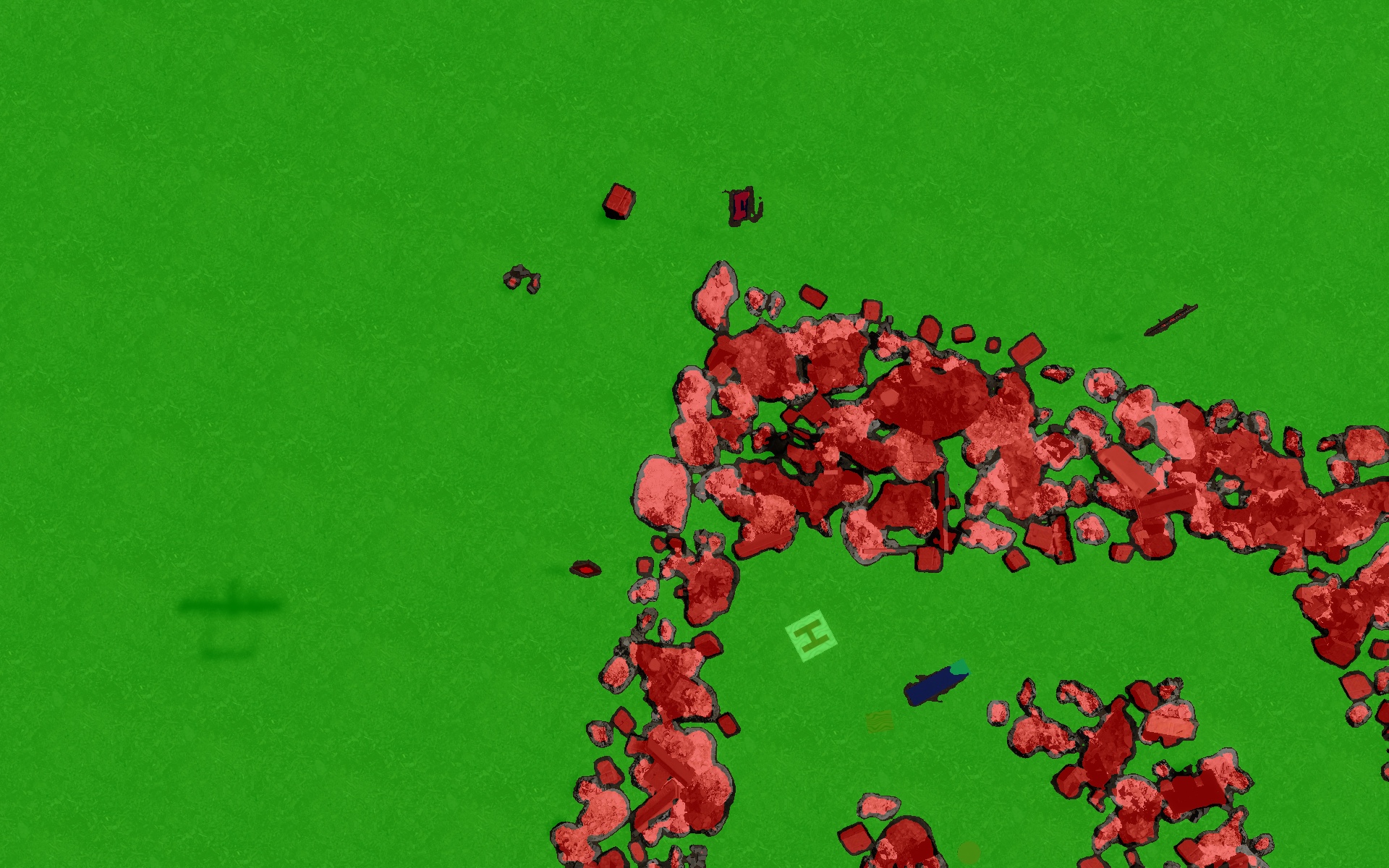
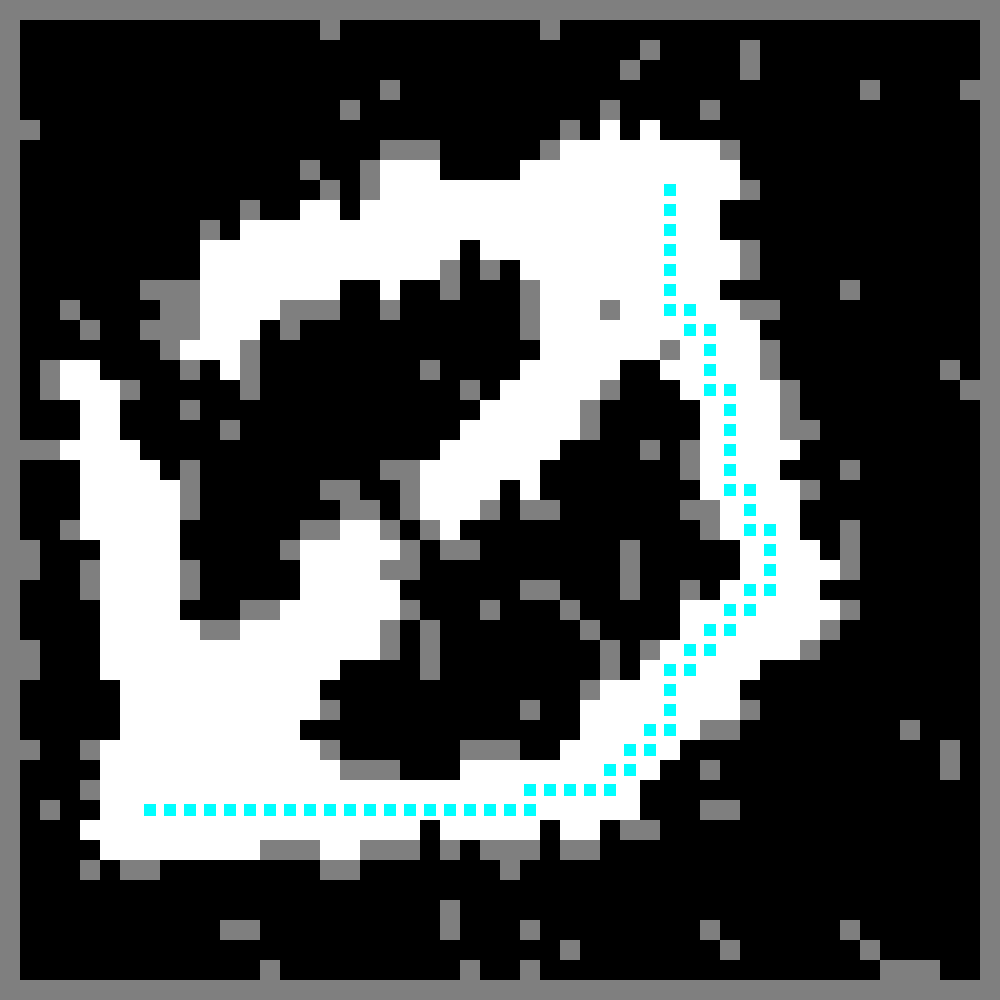
A Unity simulation frame and its segmentation mask; the grid and route here are recomputed from that mask.
What I did
- Unity simulation: synthetic labelled aerial data, a closed-loop test bench and a live mode that runs the Python flight programs against ArduPilot SITL
- Trained SegFormer-B0 for traversability and YOLOv8n for the landing target
- Turned their output into a 2D occupancy grid and route for the ground vehicle
Result
- Segmentation mIoU, SegFormer-B0 (first dataset)
- 79.5%
- Target detection mAP@50, YOLOv8n
- 98.5%
- Stop distance from the target, single live SITL run
- 0.19 m
- Unity and Python parity cases
- 162/162
93 Unity EditMode tests cover the planner, fusion and MAVLink encoding.
Footage
Simulation frames
 (full size, opens in a new tab)
 (full size, opens in a new tab)
 (full size, opens in a new tab)
Problem and Approach
In the TEKNOFEST autonomous systems competition, a fixed-wing drone surveys a 50 by 50 m disaster area, finds a landing target and must hand a ground vehicle a safe route through rubble. Only one of three corridors is open, and no marker shows which.
Approach
The drone's frames are segmented into drivable and blocked ground (SegFormer-B0) and searched for the target (YOLOv8n). Results from several views are fused into a 1 m grid, obstacles are inflated by the vehicle's footprint and A* plans the route; a route that is not continuous through free space is never released. The same pipeline is mirrored in Python for the onboard computer, and a parity tool confirms the two agree on 162 of 162 cases.