Low-Cost Hyperspectral Plant Monitoring
Back to shelfA hyperspectral plant-monitoring system, in progress with Altıntar Tarım.
Cost: About USD 600 for the whole camera system, against tens of thousands for commercial hyperspectral cameras.
- Role
- Camera and monitoring-system developer
- Year
- 2026
- Stack
- Monochrome global-shutter sensor, M12 optics, Diffraction grating, Raspberry Pi 5, PostgreSQL
- Also planned
- Spectral indices, PLSR
How the planned system will read a plant
Spectral indices and PLSR will estimate chlorophyll and nitrogen status.
A real lab photo; the scan is the planned design. The curve is a typical leaf shape, not a measurement.
What I'm doing
- Designing a pushbroom hyperspectral camera from a monochrome sensor, M12 optics and a diffraction grating
- Designing the rail that carries it over the plants
- Designing the Raspberry Pi 5 and PostgreSQL data side and a web dashboard
- Designing the spectral and RGB analysis
Lab photos
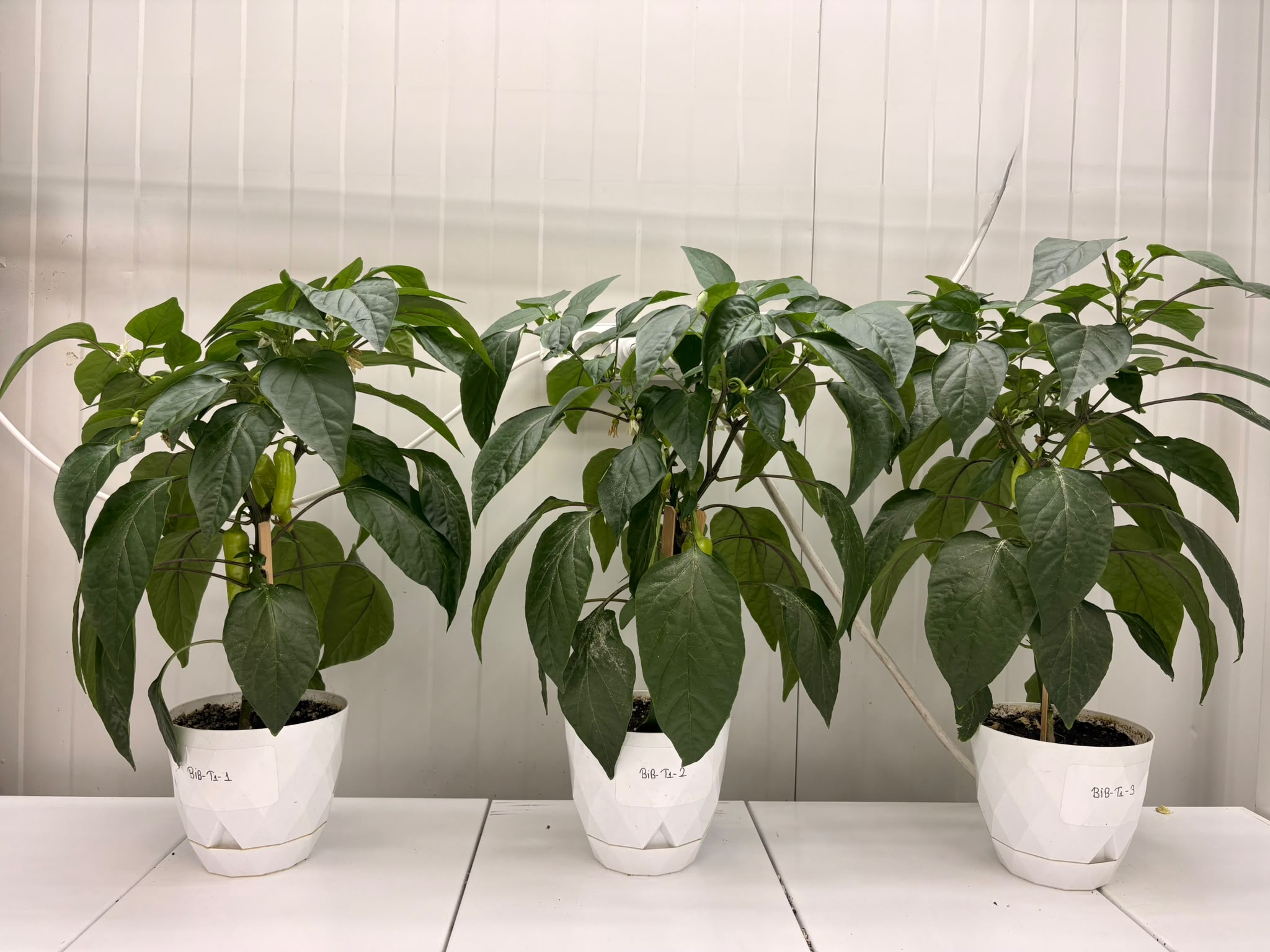 (full size, opens in a new tab)
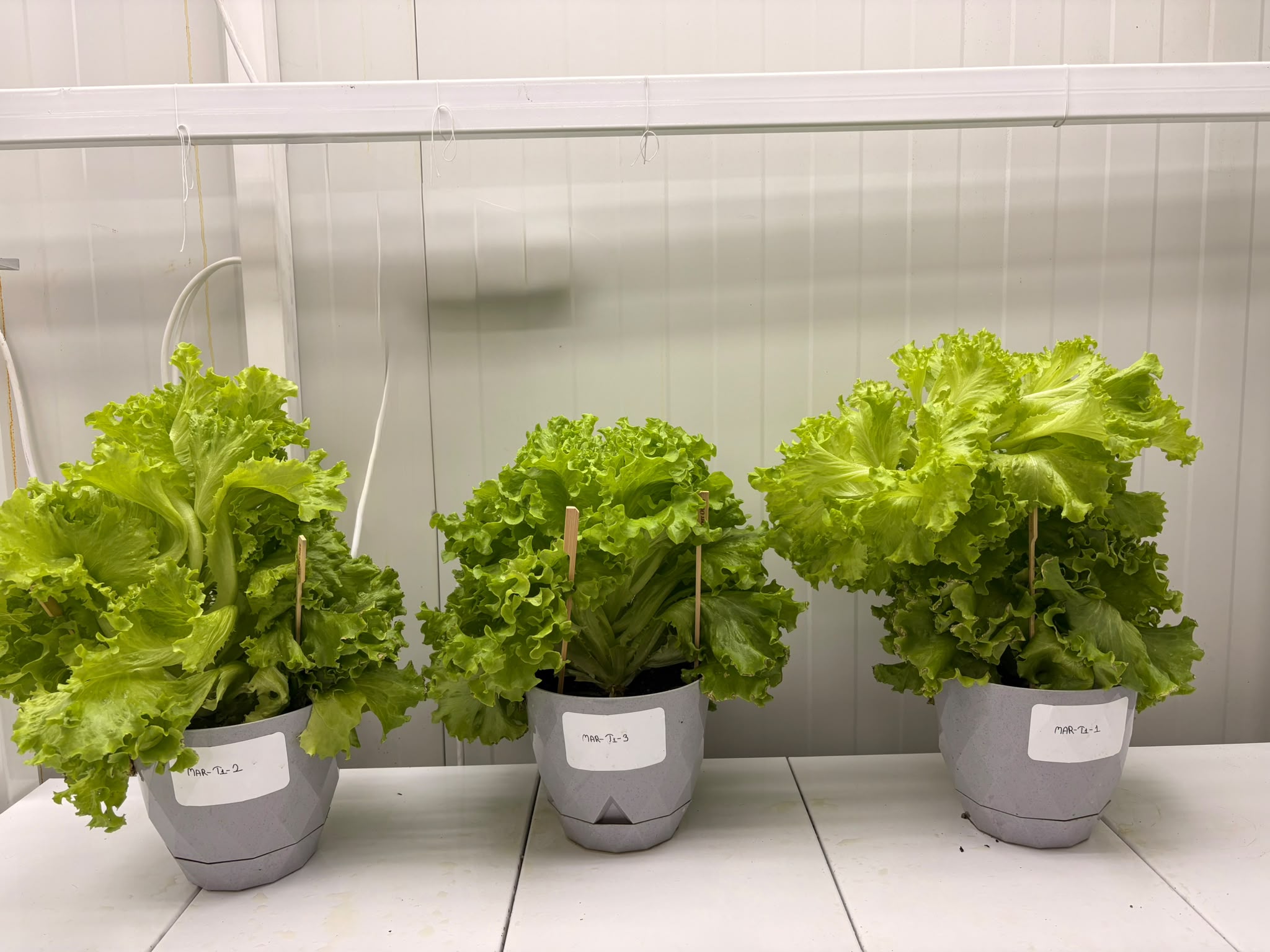 (full size, opens in a new tab)
Problem and Approach
Commercial hyperspectral cameras are too expensive for a small plant lab, and Altıntar Tarım's staff measure plant growth by hand. The project explores a lower-cost way to track growth, chlorophyll and nitrogen status.
Approach
The camera is designed to pair a global-shutter monochrome sensor with M12 optics, a 300 lines/mm diffraction grating and a 500 nm long-pass filter, covering 500-950 nm. It will scan lettuce and pepper on a 1.5 m rail next to RGB cameras, run by a Raspberry Pi 5 that stores results in PostgreSQL. Spectra are to estimate chlorophyll and nitrogen status (spectral indices, PLSR), RGB images plant height and leaf area, and both are to be checked against staff measurements and lab analyses.